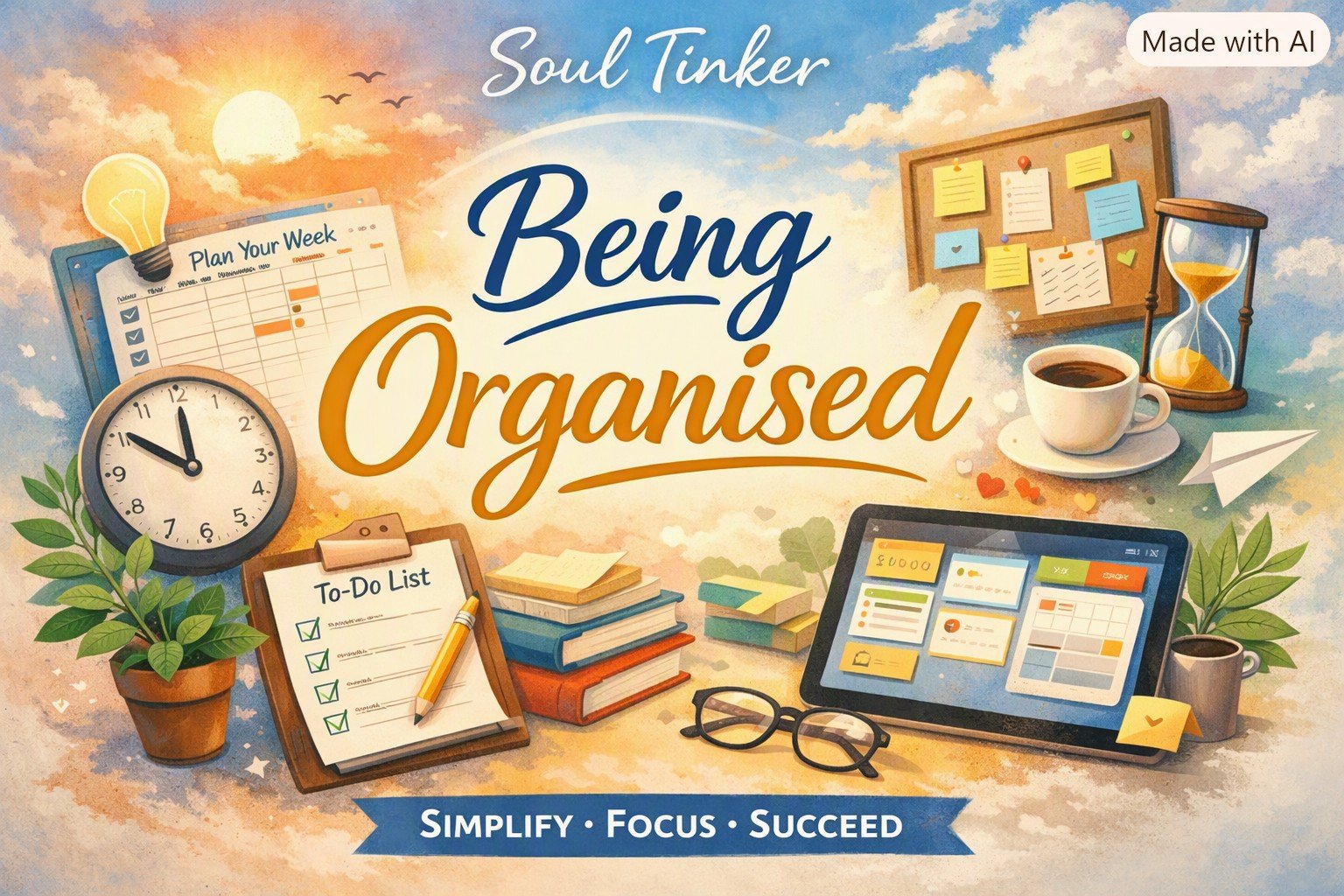
Being Organised
Being organised means creating systems, routines, and clarity in your environment and mind. It helps you save time, reduce stress, and make better decisions. Staying organised always requires habits like planning, decluttering, and using tools that fit your lifestyle.
Let's break this point-wise to pause and think how we can enhance our lives by sparing a few minutes in planning to be organised and thus save a lot of time by avoiding indecision, chaos and clutter.
What Being Organised Really Means
- Goal setting: Aligning daily actions with long-term ambitions.
- Planning routines: Structuring quarters, months, weeks, and days.
- Decluttering: Keeping physical and digital spaces tidy.
- Systems and methods: Set a simple flow of everyday life. Use calendars, apps, or notebooks to track tasks.
- Habits: Building routines that reduce decision fatigue.
Risks of Poor Organisation:
While you read this, think about whether any of this is a regular phenomenon in your life. Is it? Then grab a pen & paper and work out a plan for yourself so that you don't miss it next time ever.
- Missed deadlines → career setbacks.
- Stress overload → health issues like insomnia or hypertension.
- Damaged relationships → lateness or forgotten commitments.
- Financial waste → duplicate purchases or unpaid bills.
Benefits of Being Organised
- Time savings: Disorganisation costs the average person 1.5 hours daily searching for items or recalling tasks.
- Stress reduction: Clutter raises cortisol levels, linked to anxiety and poor sleep.
- Better productivity: Employees who set daily goals are 12% more productive.
- Improved decision-making: Organised individuals experience less mental strain and avoid decision fatigue.
- Confidence boost: Order creates momentum and a sense of control.
Sunday isn’t just for resting. It’s your chance to gently set yourself up for a smoother week. Choosing Sunday as your setup day for the week is a powerful habit because it blends reflection, planning, and preparation into a calm, spacious moment before the busyness begins. Sundays naturally feel like a pause, giving you perspective before Monday’s rush. You can look back at what worked last week and adjust. Sundays often allow uninterrupted time to align personal and professional goals.
How to Use Sundays Effectively?
Balance planning with relaxation so you start energised. Write down the top 3 priorities for work, health, and relationships. With this in mind, work out the following:
✨ 1. Plan your week : Check appointments, deadlines, school/work commitments & important tasks. Also mark important birthdays, anniversaries etc to be wished, parties, meetings etc.
📝 2. Make a simple to-do list for the week: Pick 3 priorities for Monday. Allot all other work for various days. Don’t overload yourself.
🏠 3. Reset your space: Declutter the visible mess, organise your essentials, and prepare your work bag.
🍱 4. Think ahead about meals: Plan a few easy meals or prep basics so weekdays feel less rushed, and refill your grocery if needed.
👗 5. Prepare for Monday: Clothes, bags, documents, chargers—keep the morning chaos away.
📱 6. Clean your digital space: Clear unnecessary notifications, organise important messages & check your calendar.
💰 7. Take 10 minutes for money : Check upcoming payments, expenses and your weekly budget.
🧘♀️ 8. Give yourself some quiet time: Read, walk, journal, pray—or simply sit without doing anything.
😴 9. Sleep on time: A rested Sunday night is one of the best gifts you can give Monday-you.
🌸 Remember: A well-organised week doesn’t begin on Monday. It begins with a little intention on Sunday.
Sunday acts like a bridge between reflection and action. By dedicating even 1–2 hours, you transform the week ahead from chaotic to intentional. It’s not about doing more—it’s about starting with clarity and confidence.
Now, consider a wonderful extension of the Sunday setup idea to the other days, that means— preparing the night before! It is like giving yourself a gentle head start. It makes mornings smoother and helps you sleep with a lighter mind. Here are some practical ways to do it:
🌙 Night-Before Preparations
- Lay out clothes: Decide what you’ll wear tomorrow to avoid morning indecision.
- Pack essentials: Prepare your bag, laptop, or documents so you’re not rushing.
- Meal prep: Chop veggies, soak grains, or portion snacks for easy cooking.
- To-do list: Write down 3–5 priorities for the next day to clear mental clutter.
- Digital reset: Close tabs, organise files, and silence notifications.
- Gratitude reflection: Note one thing you’re thankful for—it calms the mind before sleep.
- Set alarms: Ensure wake-up times are aligned with your schedule.
Small Rituals That Help
- Tidy space: A quick 5-minute cleanup makes mornings feel fresh.
- Hydration prep: Keep a glass of water ready by your bedside.
- Mindful wind-down: Read, journal, or meditate instead of scrolling.
- Check calendar: Review appointments so you’re not caught off guard.
✨ The beauty of night-before preparation is that it’s lightweight but powerful—just 15–20 minutes can transform your mornings. It’s less about doing more and more about removing friction so you wake up ready.
Followed by all this, the next step is about monthly and yearly planning. It is like zooming out to see the bigger picture of your life. They help you move beyond daily busyness and align with what truly matters. Monthly planning is about course correction, while yearly planning is about charting the journey. Together, they ensure you’re not just busy, but moving toward what truly matters.
Before discussing this in detail, work out your daily and weekly schedules for a better organised life. Your comments are welcome to let me know if this blog helped you in some way, and also you may suggest what more you would like to read about. Thank you for your time, and truly hope this blog helps you start something good today onwards!
Pause. Reflect. Evolve.
— Soul Tinker ✨